
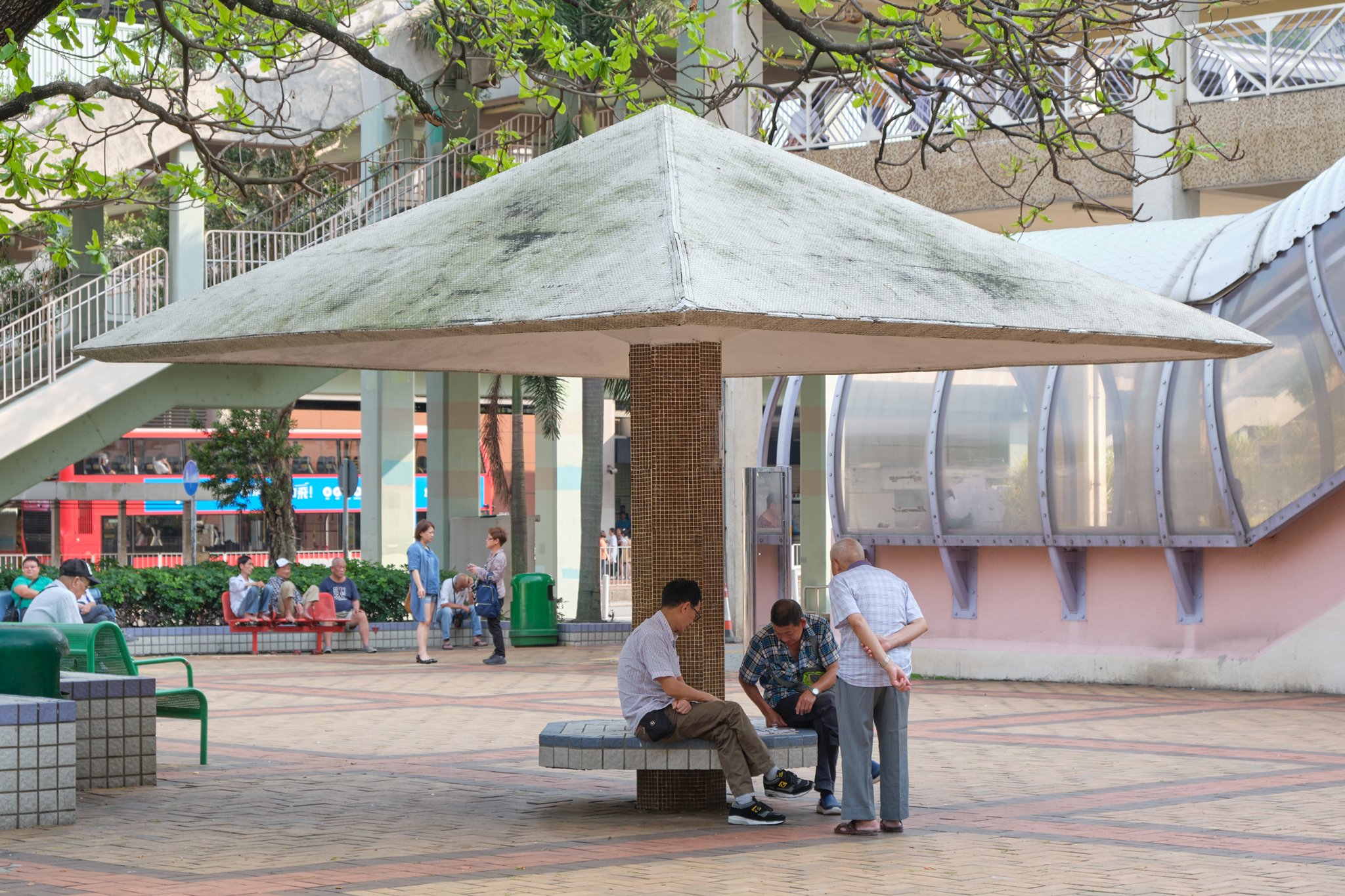
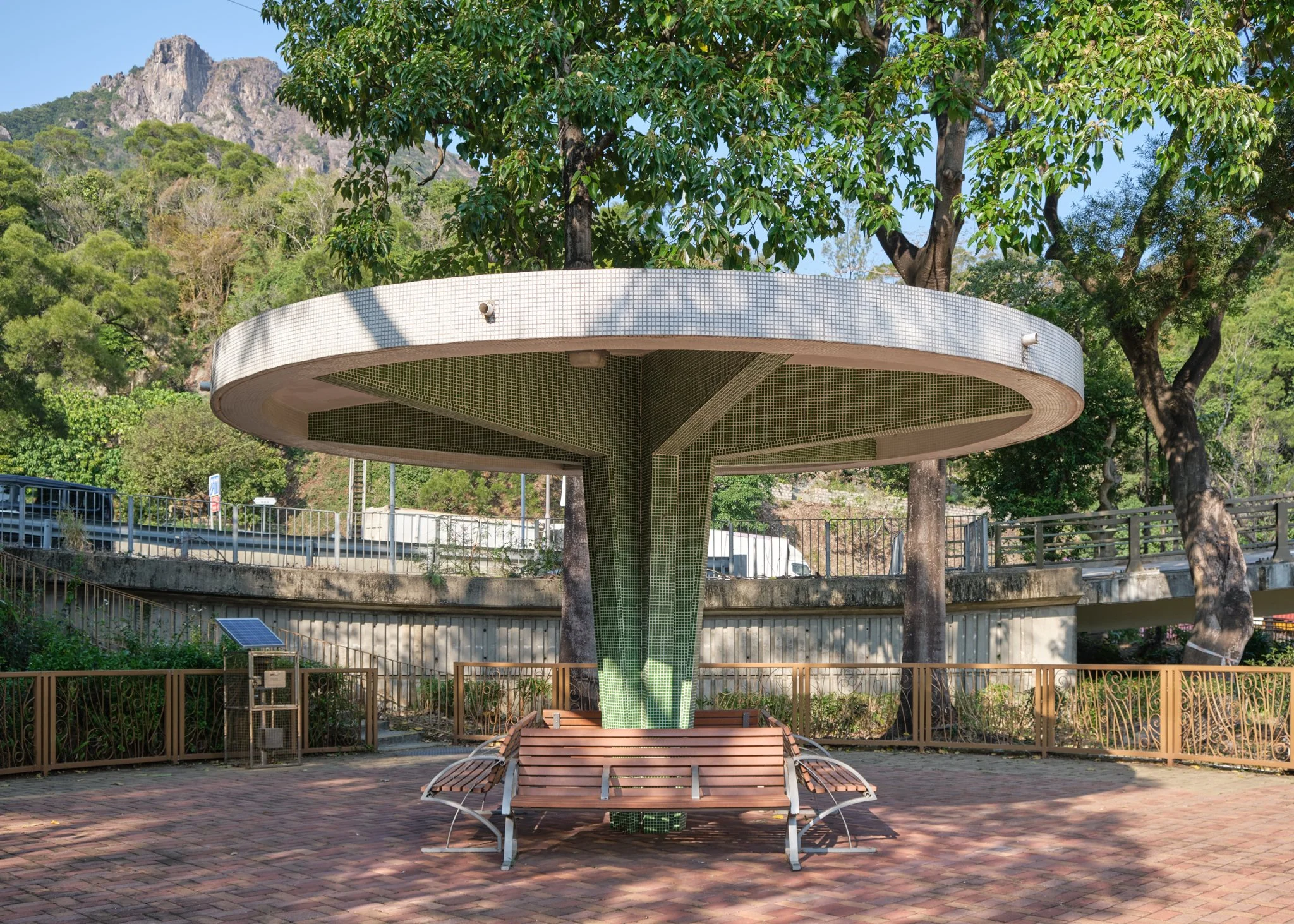
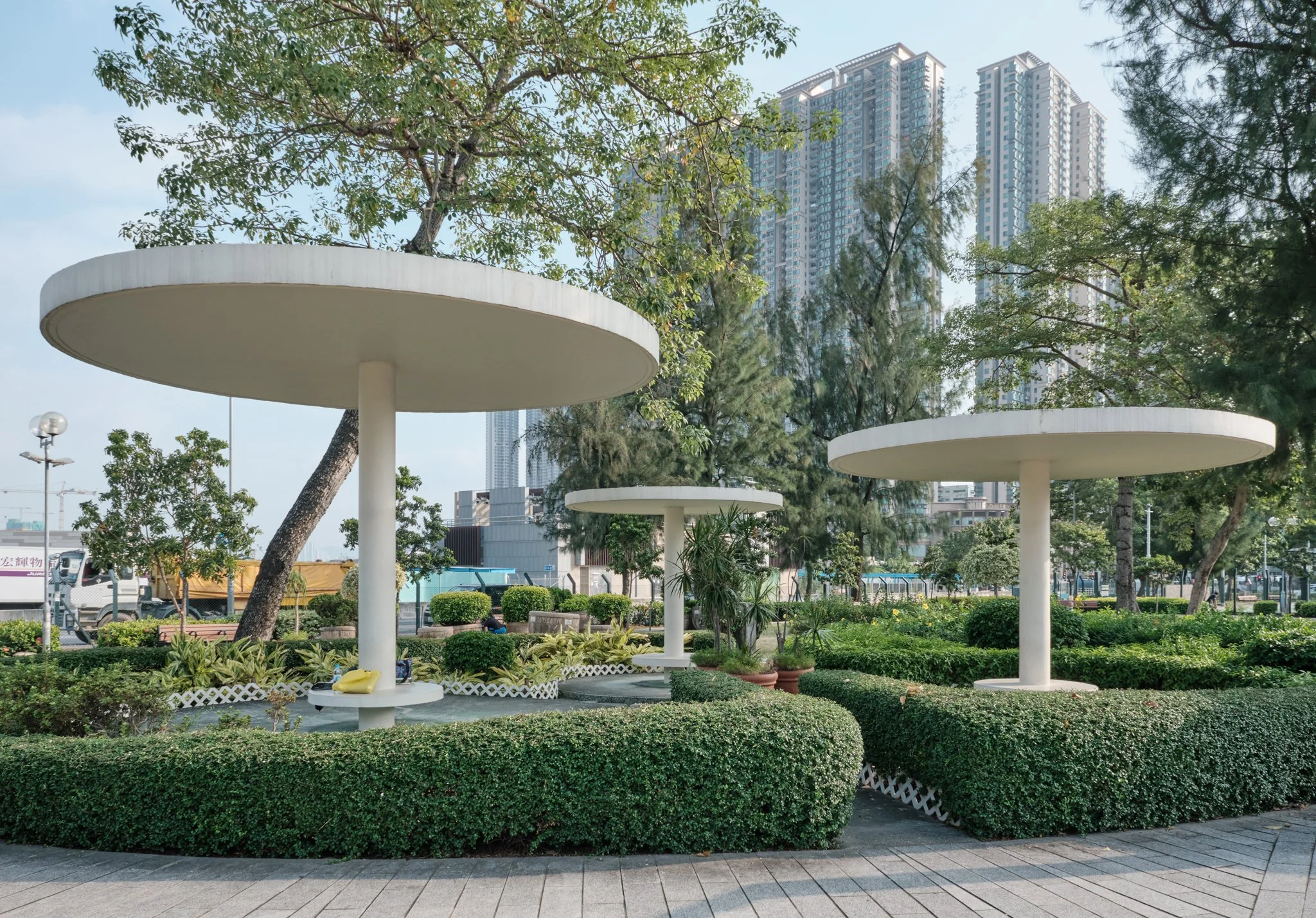
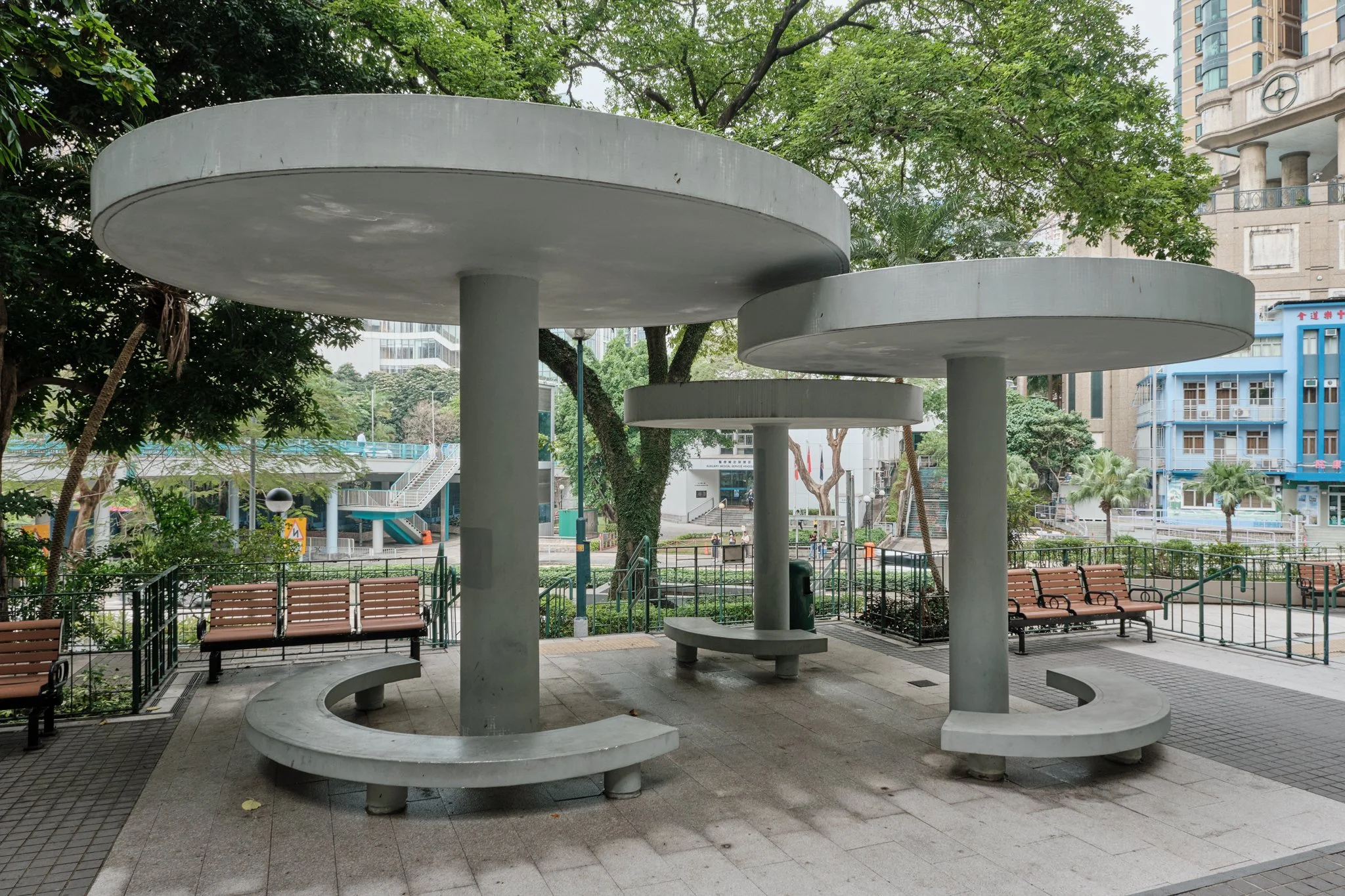
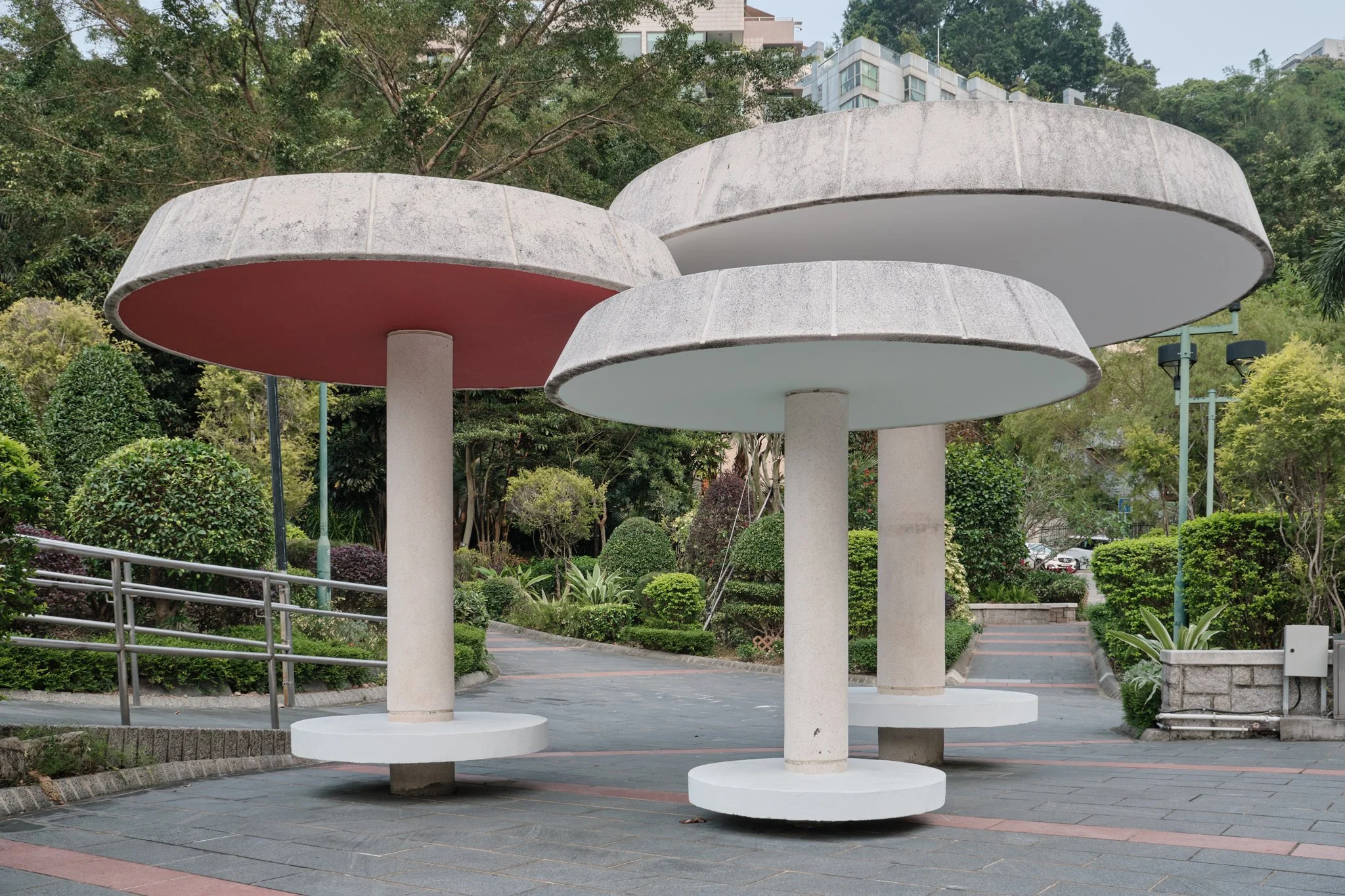
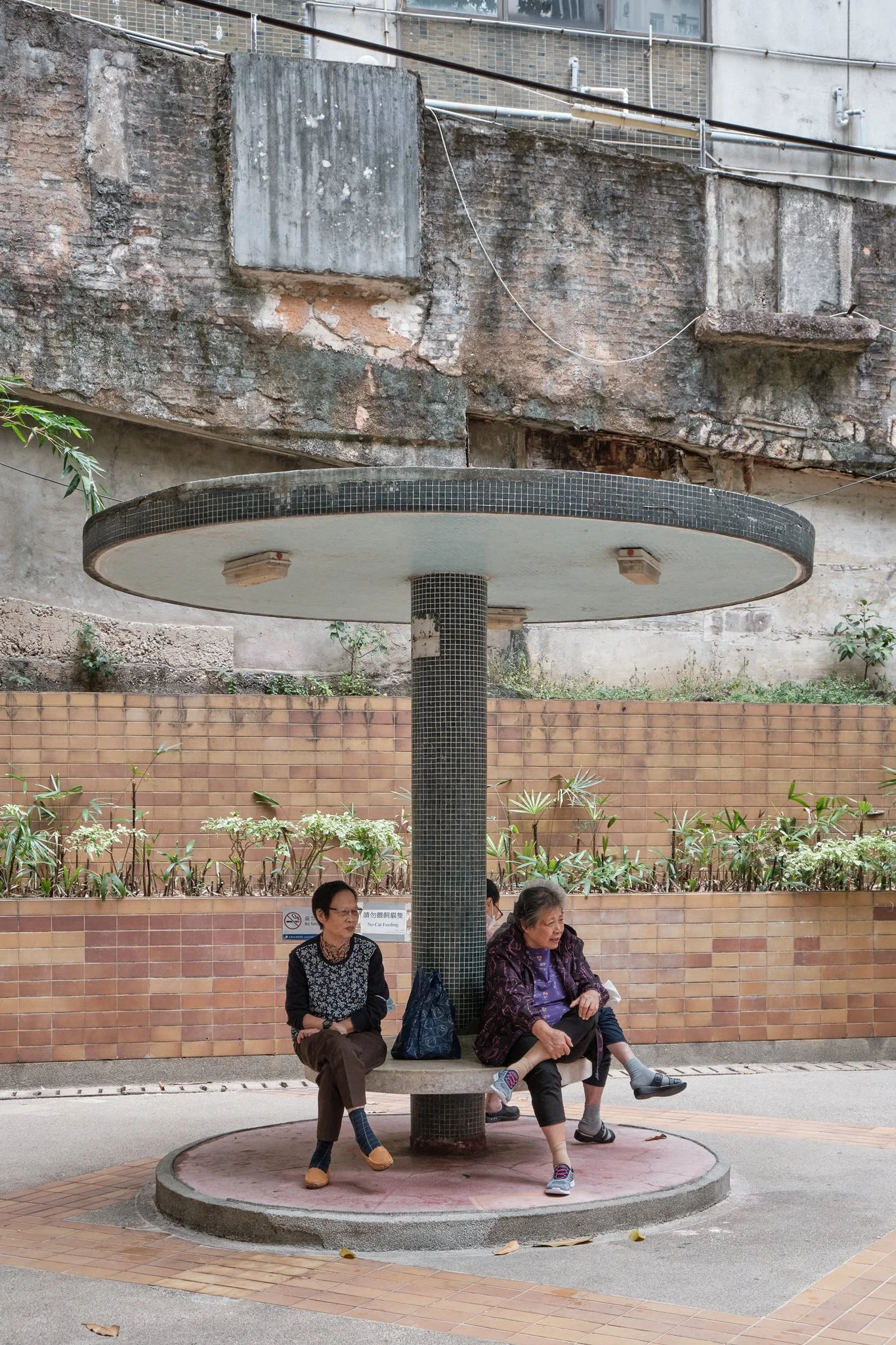
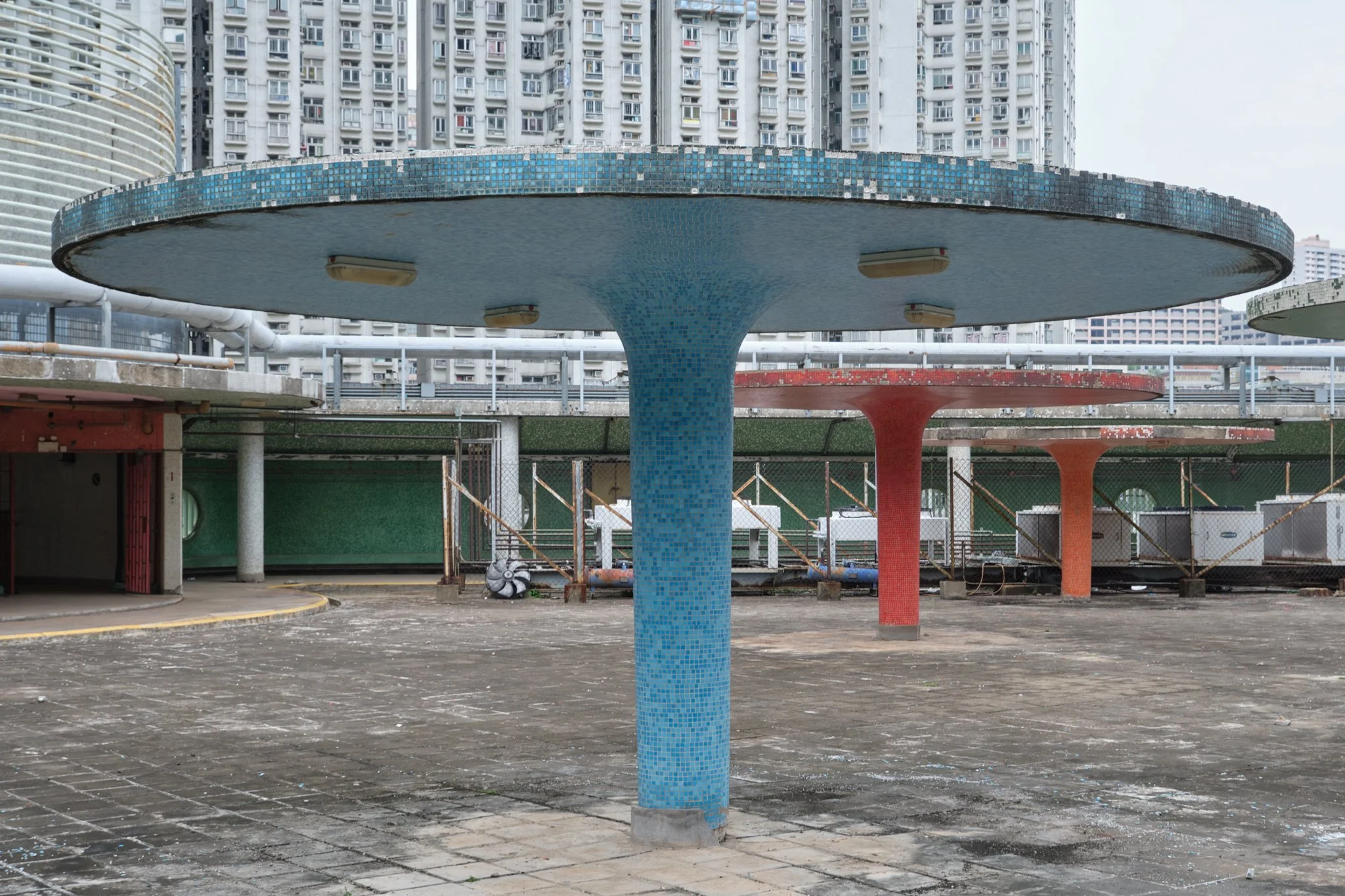
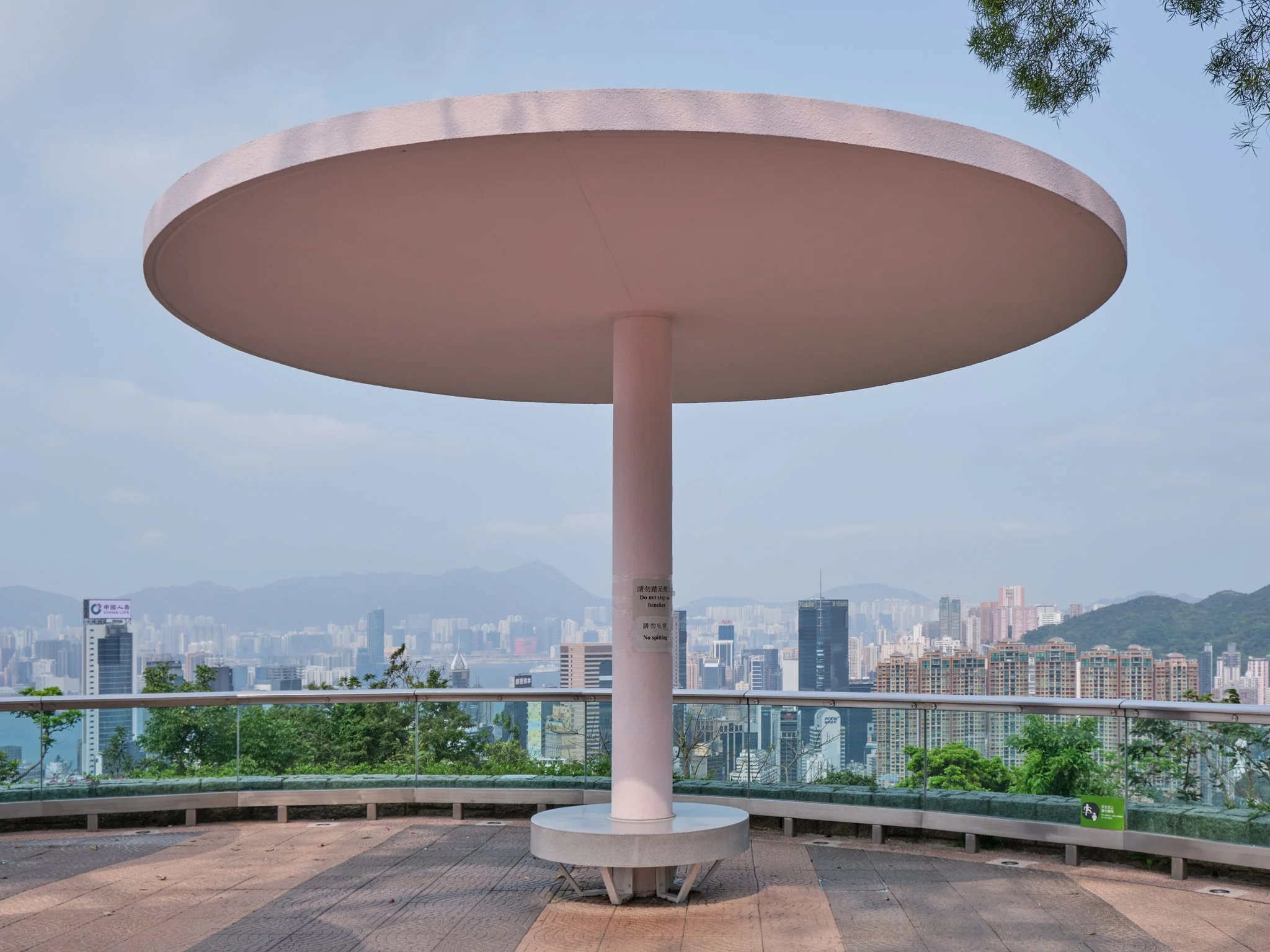
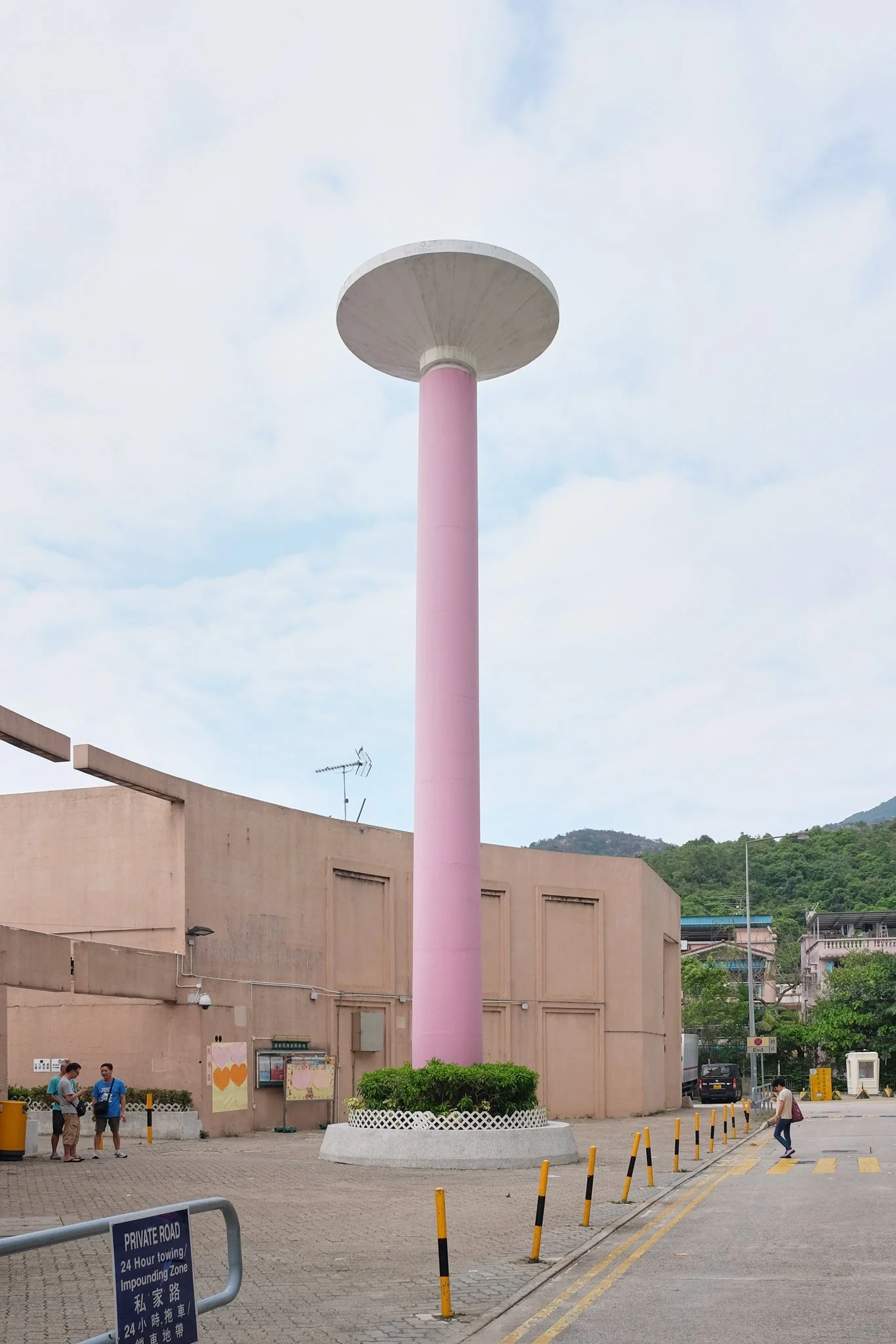
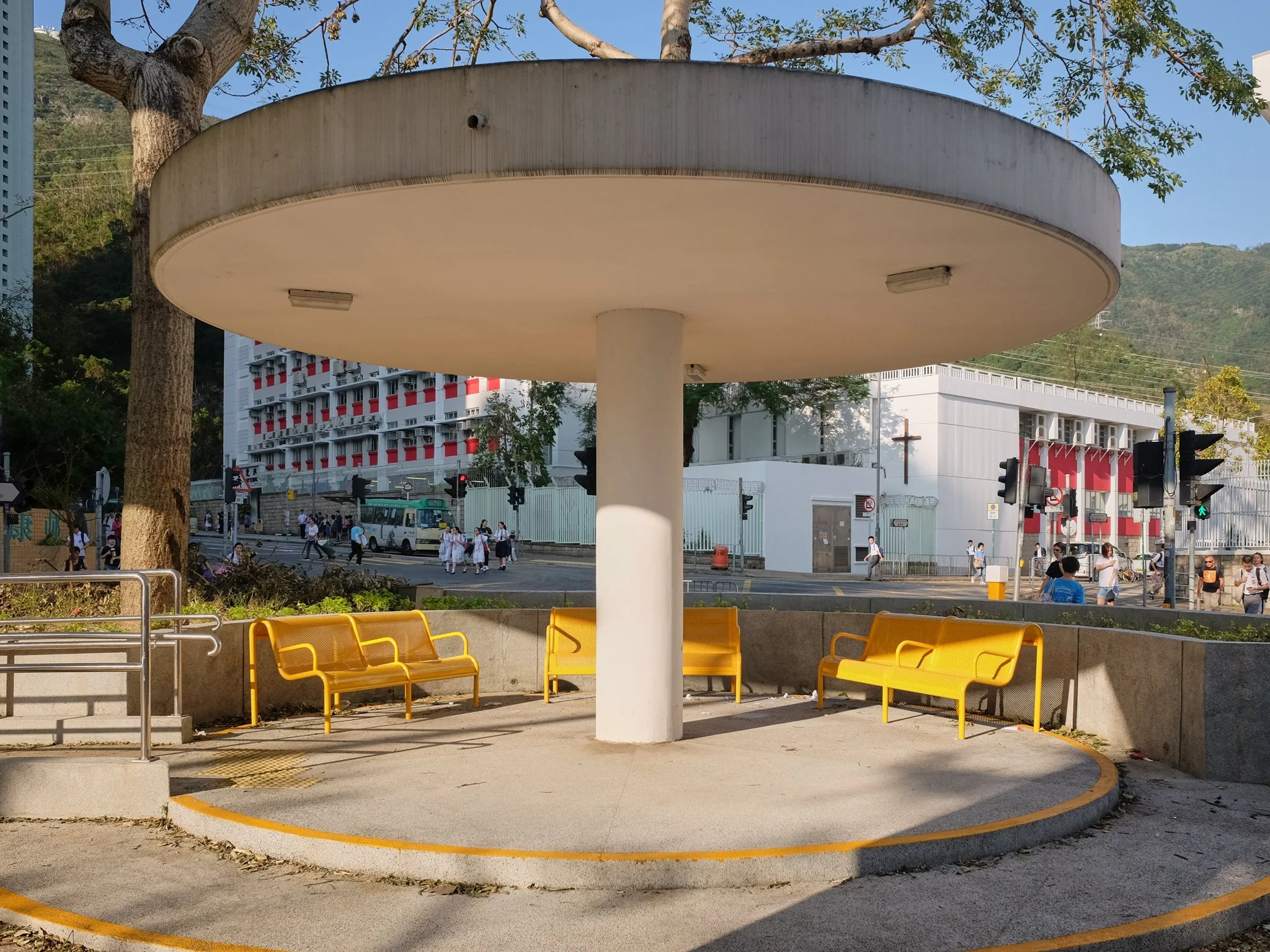
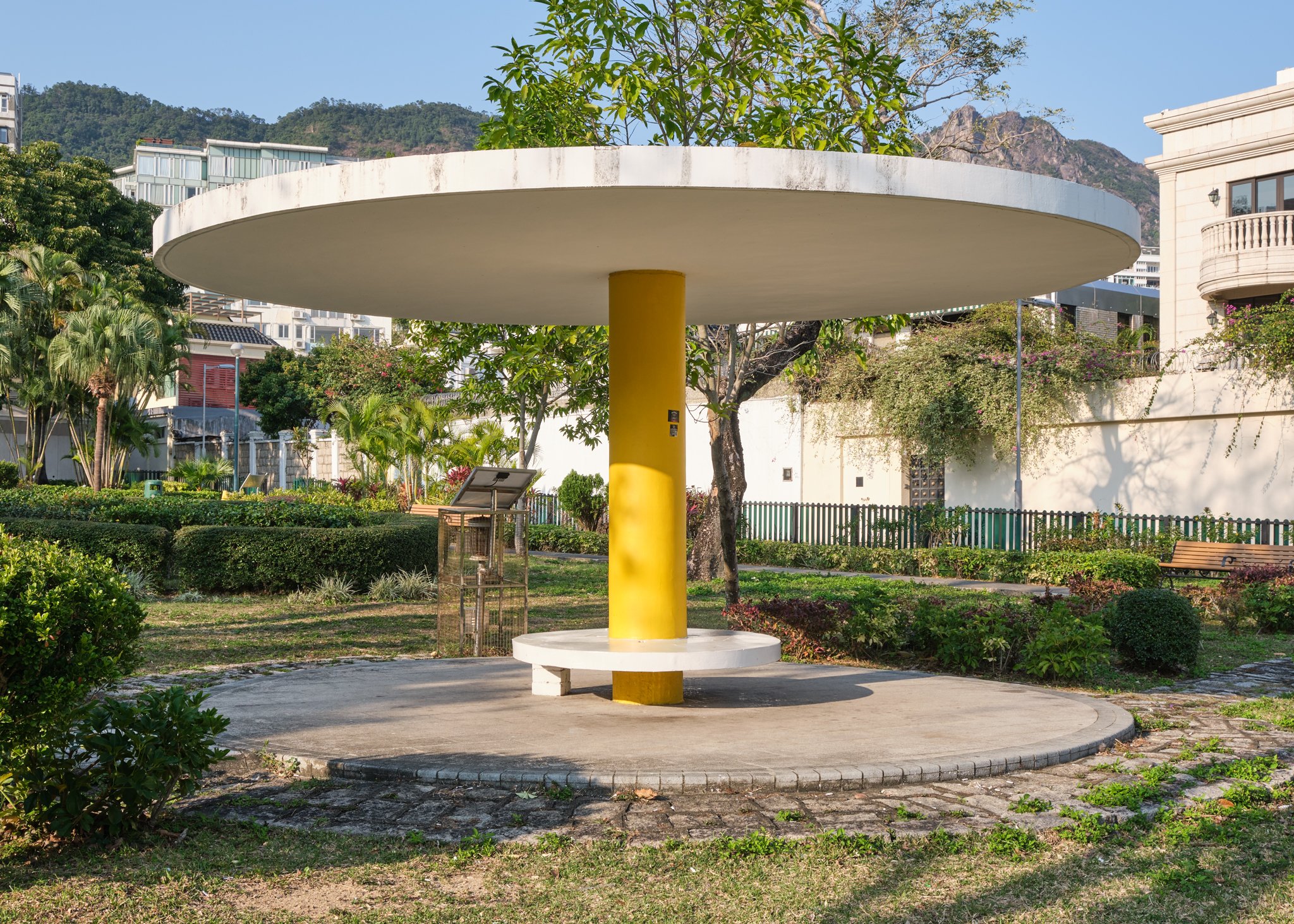
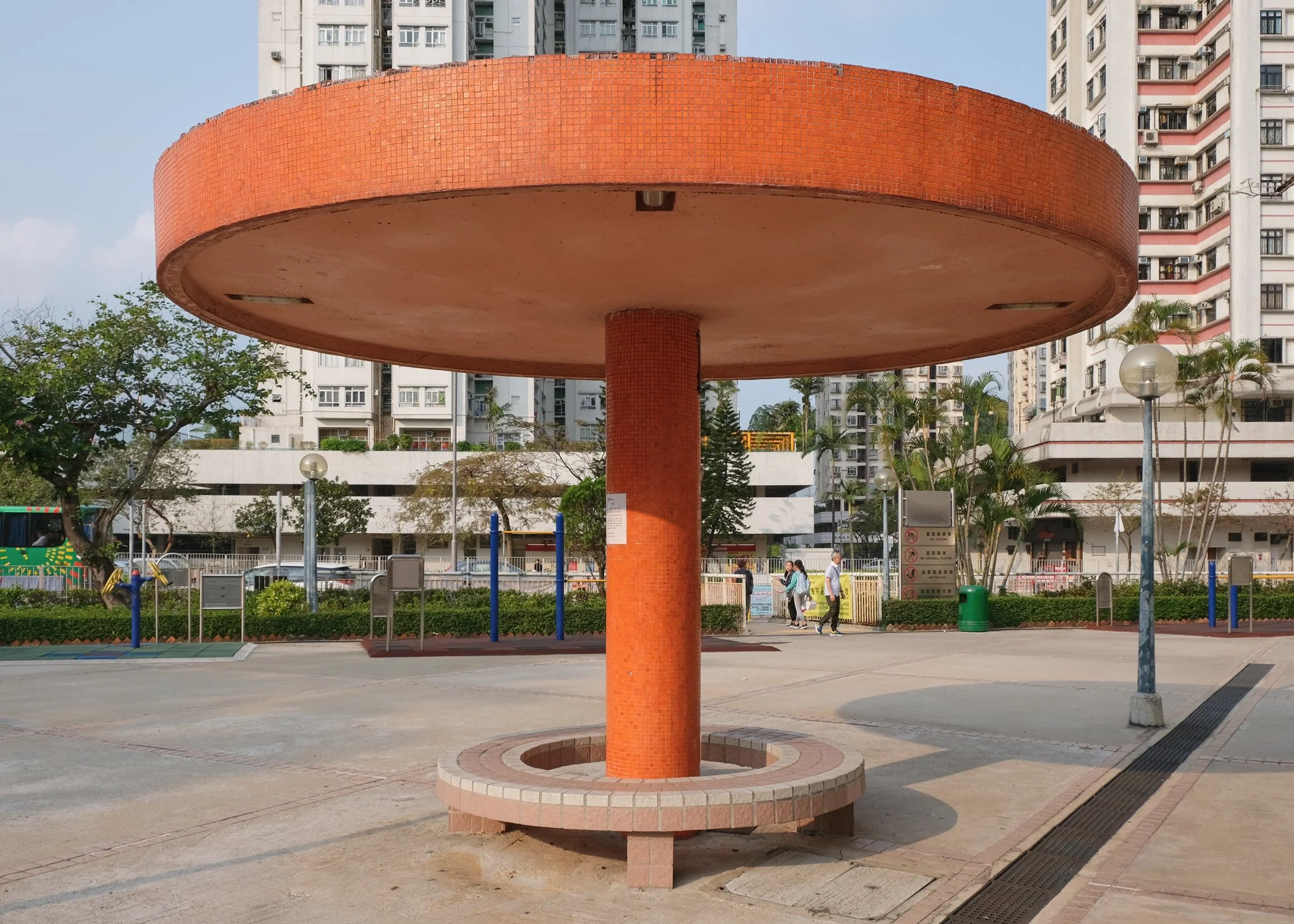
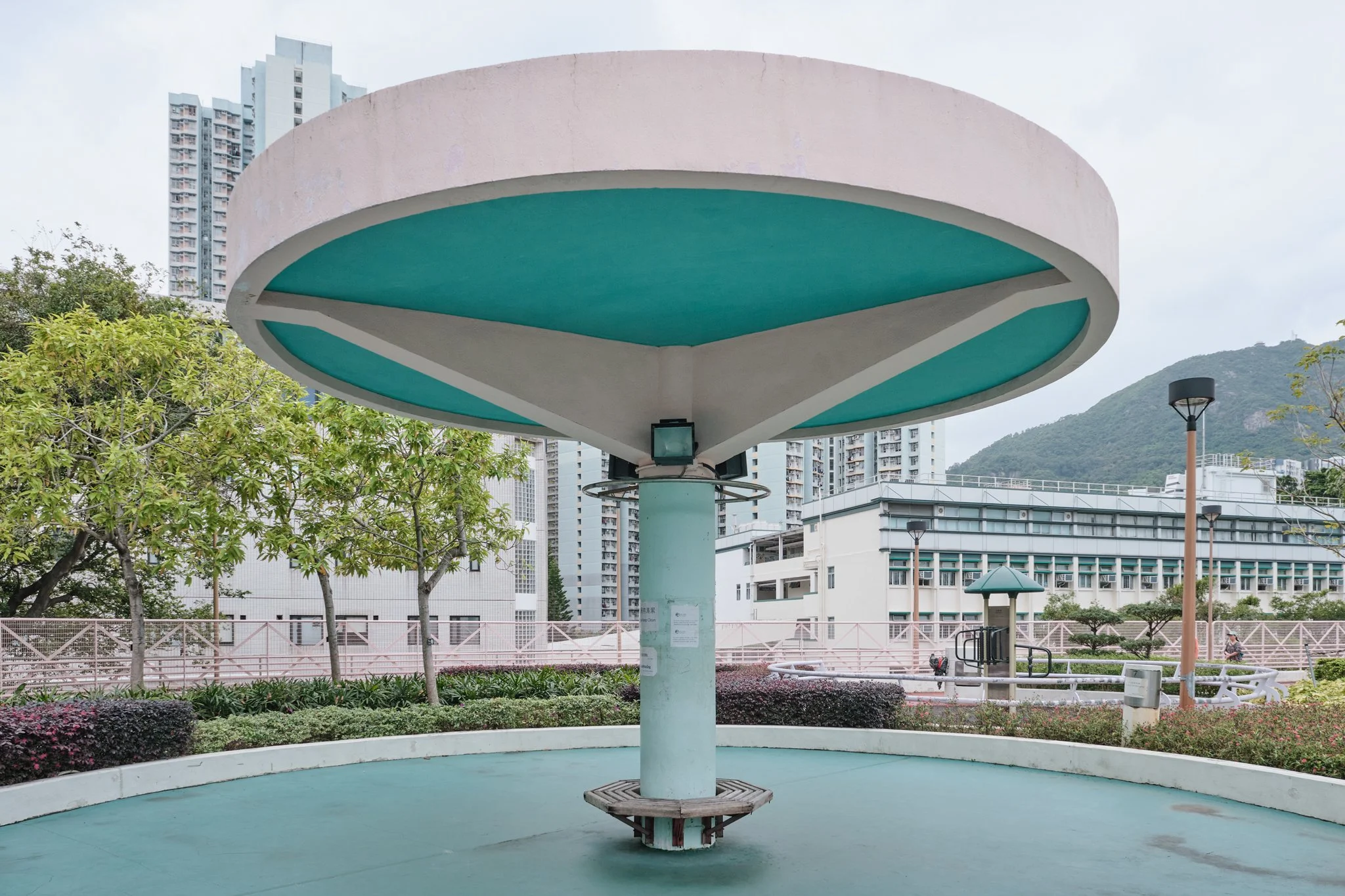
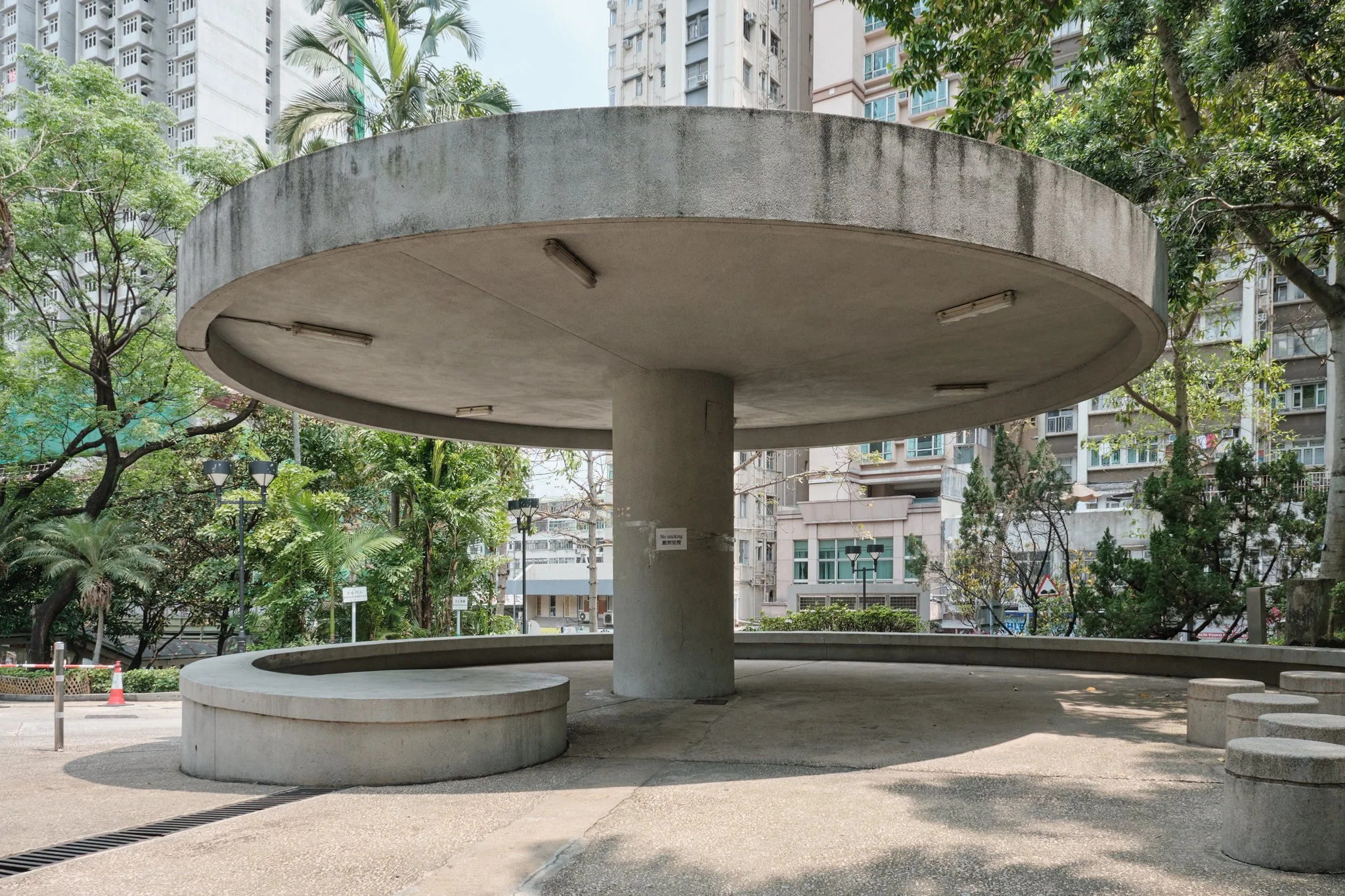
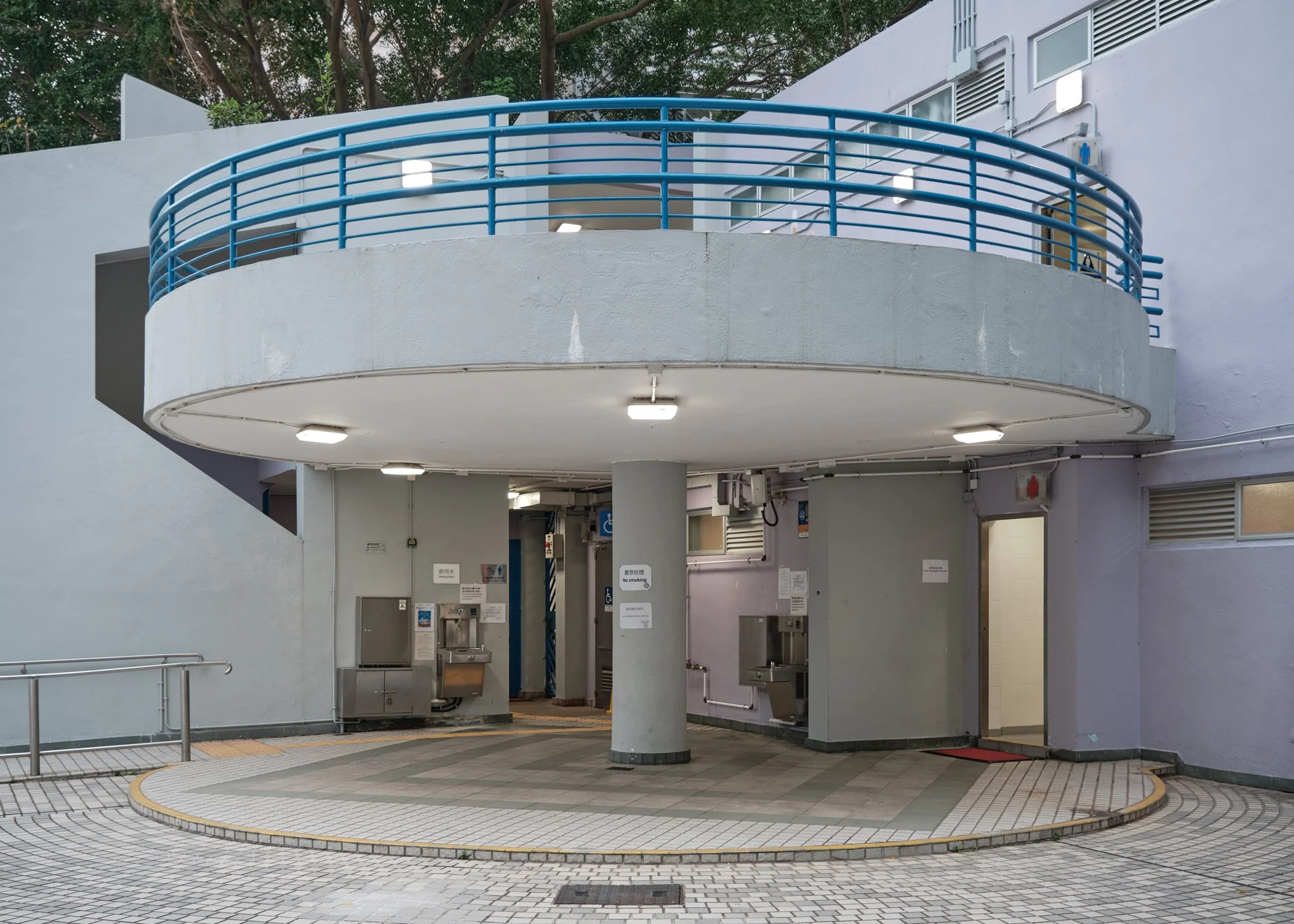
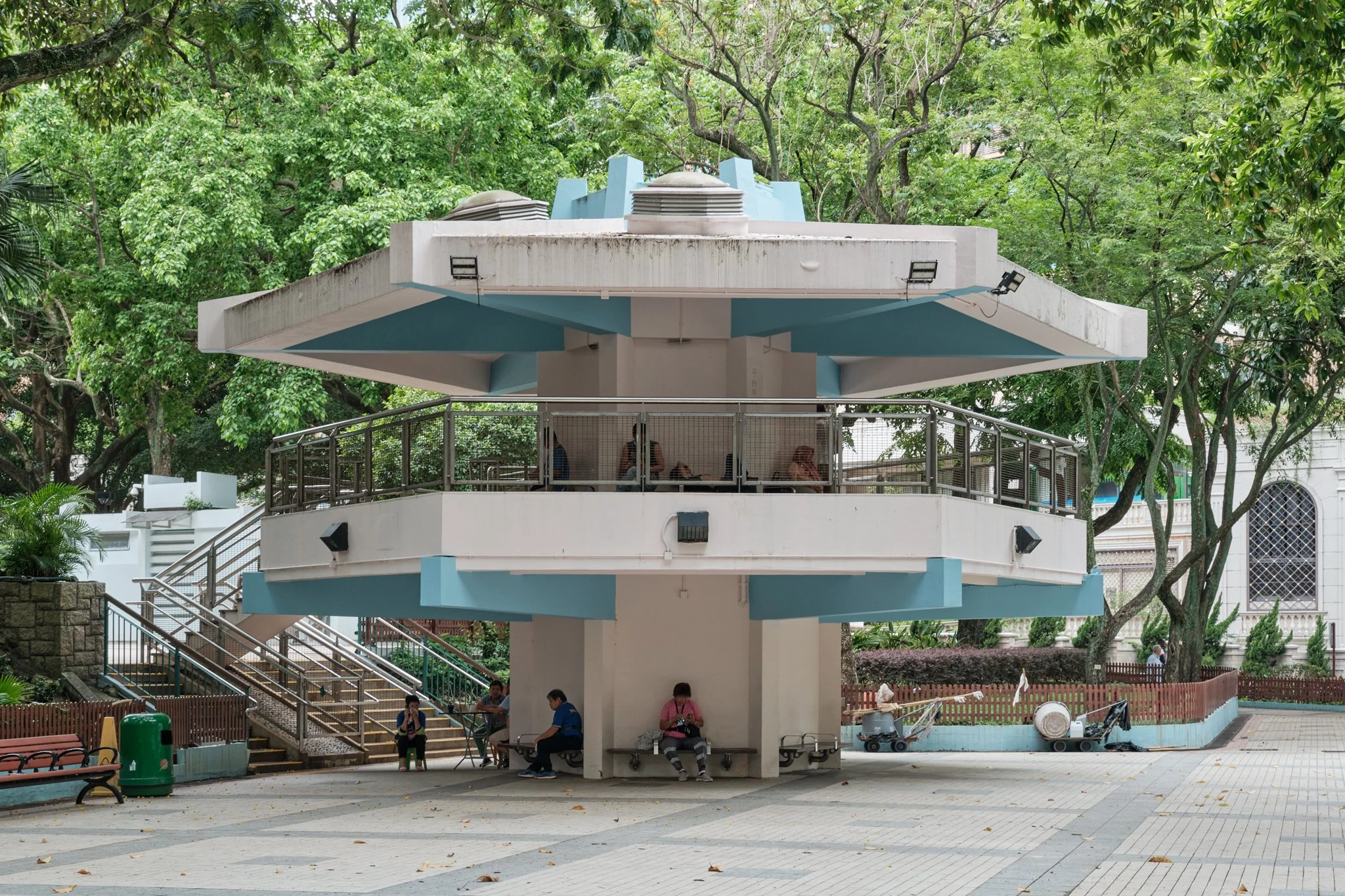
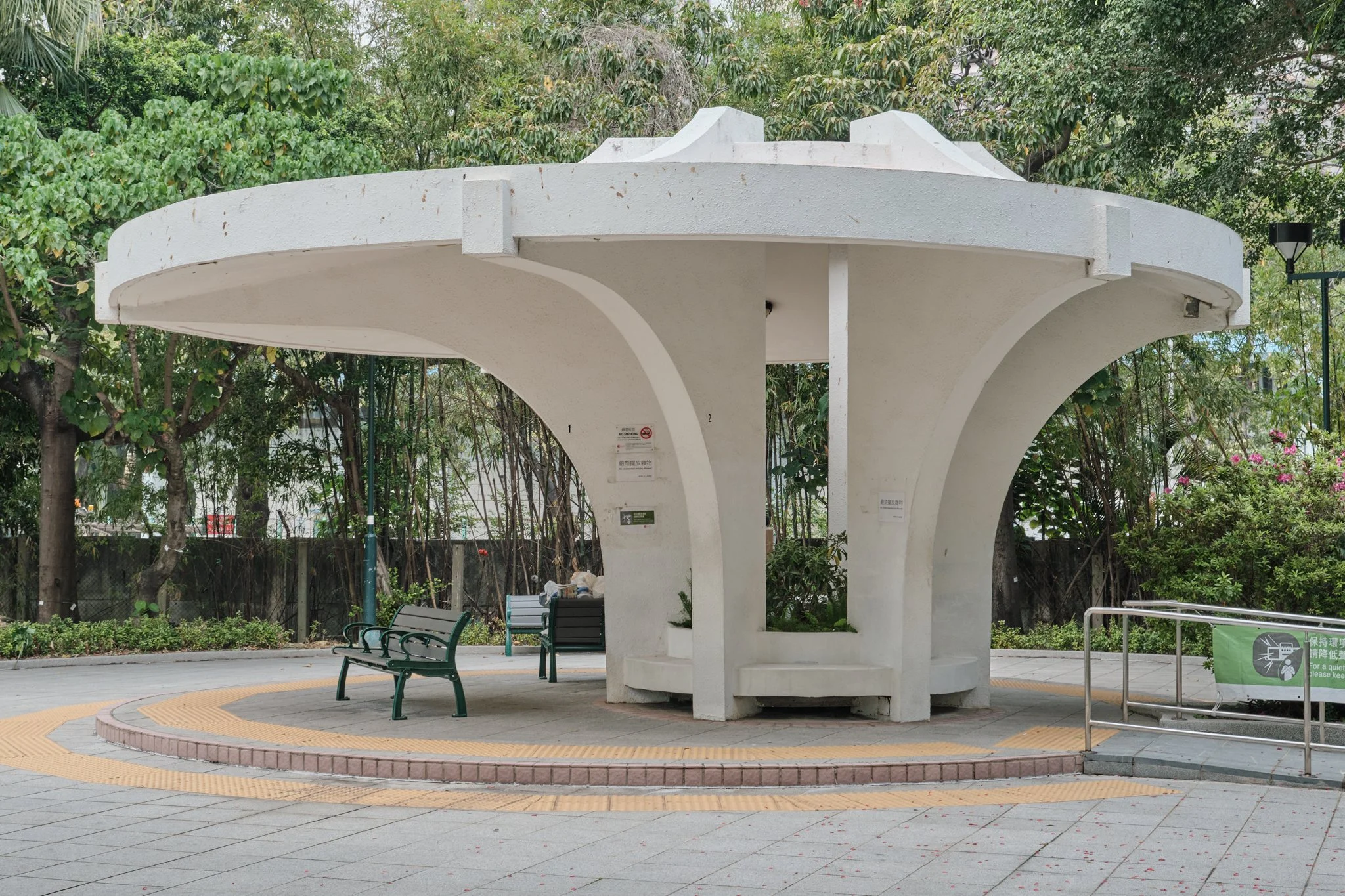
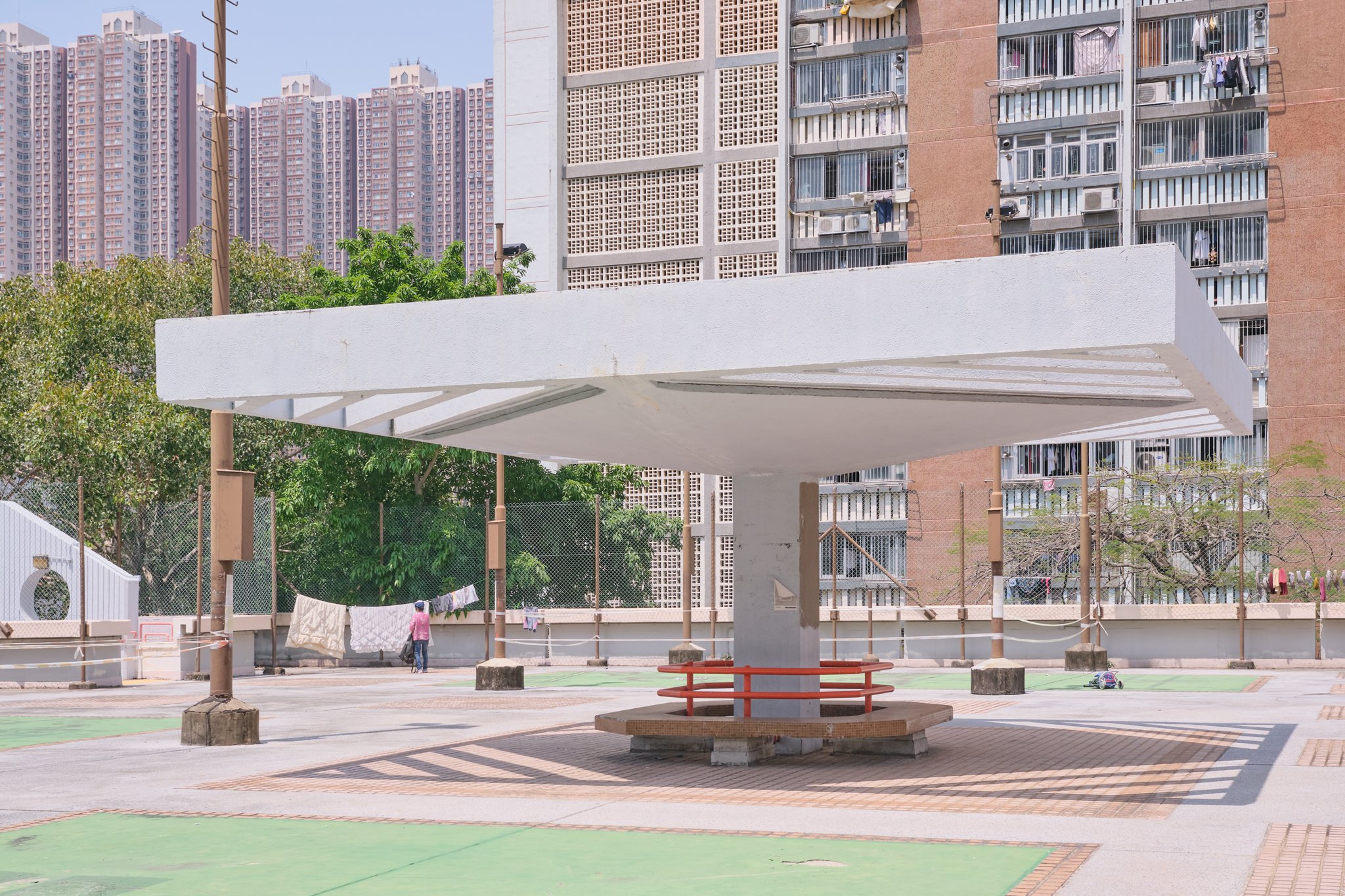
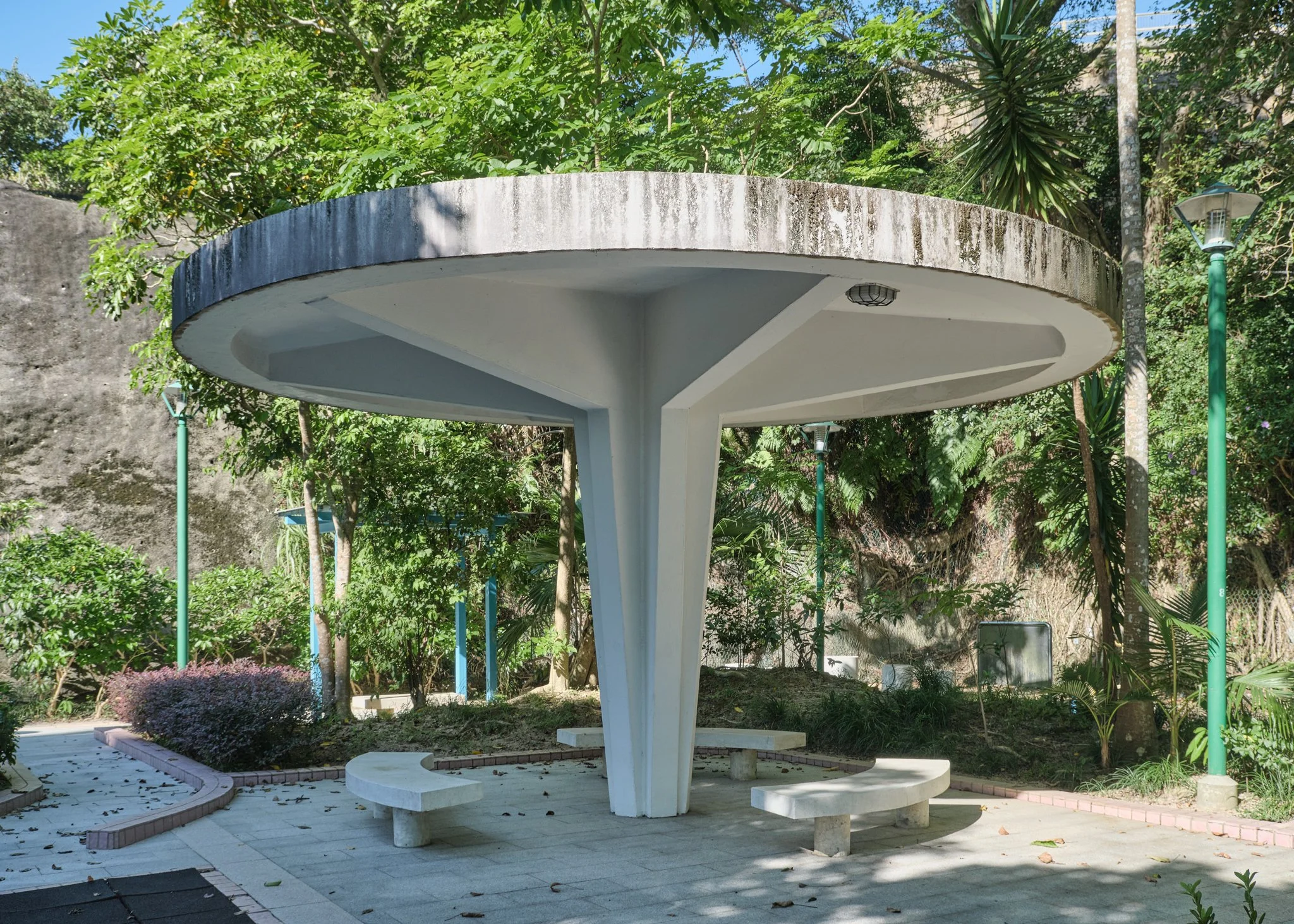
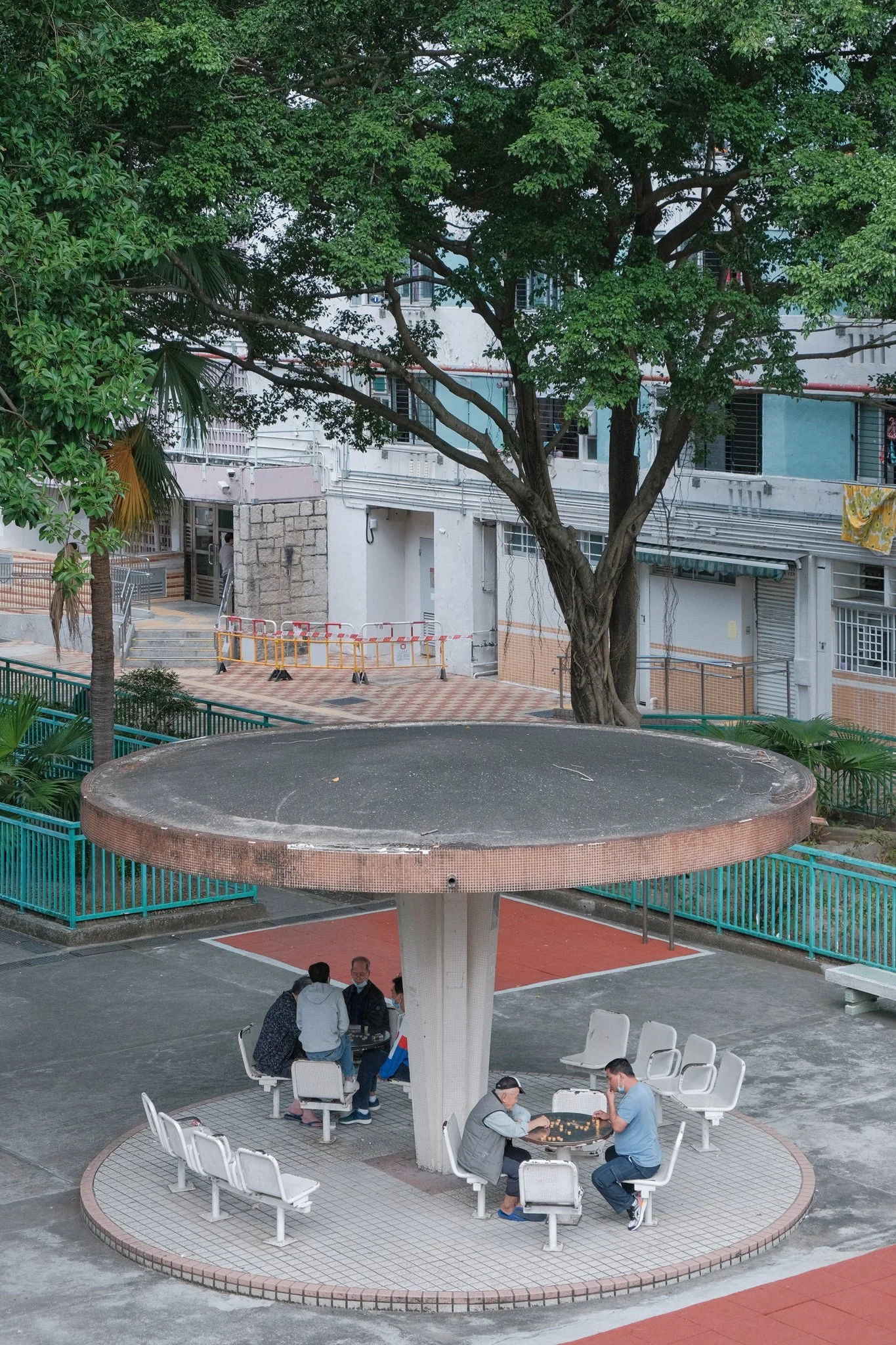
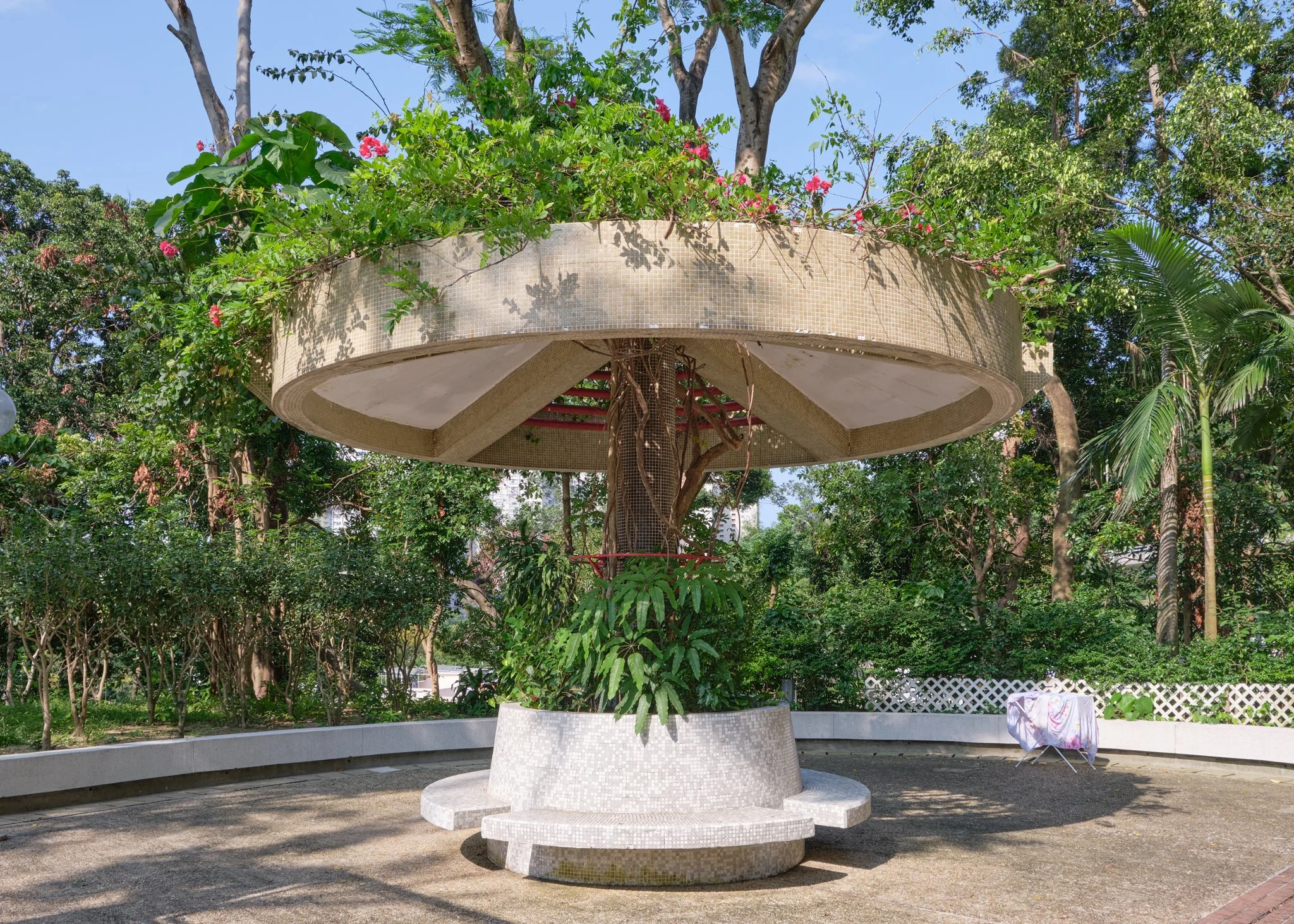
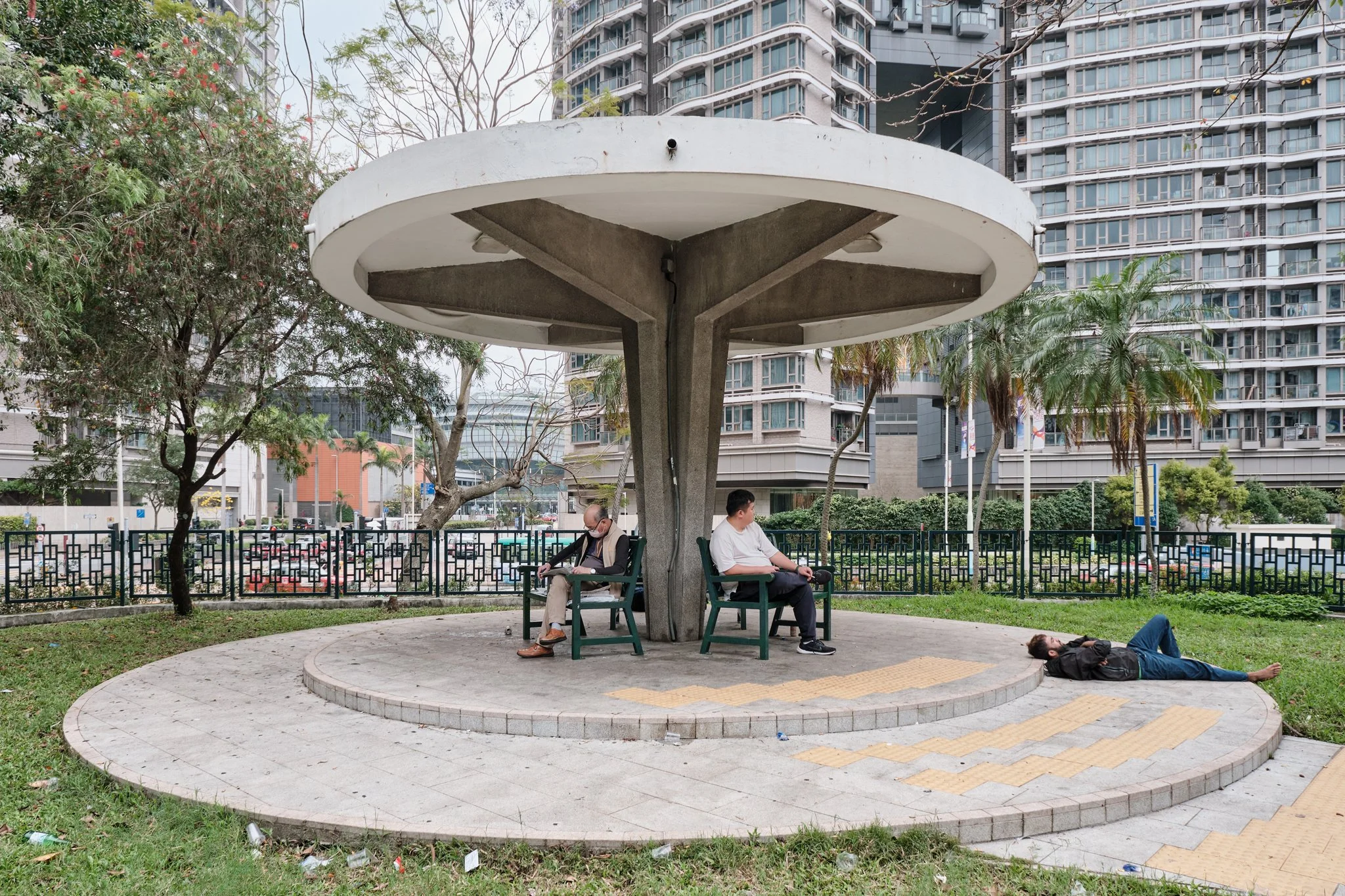
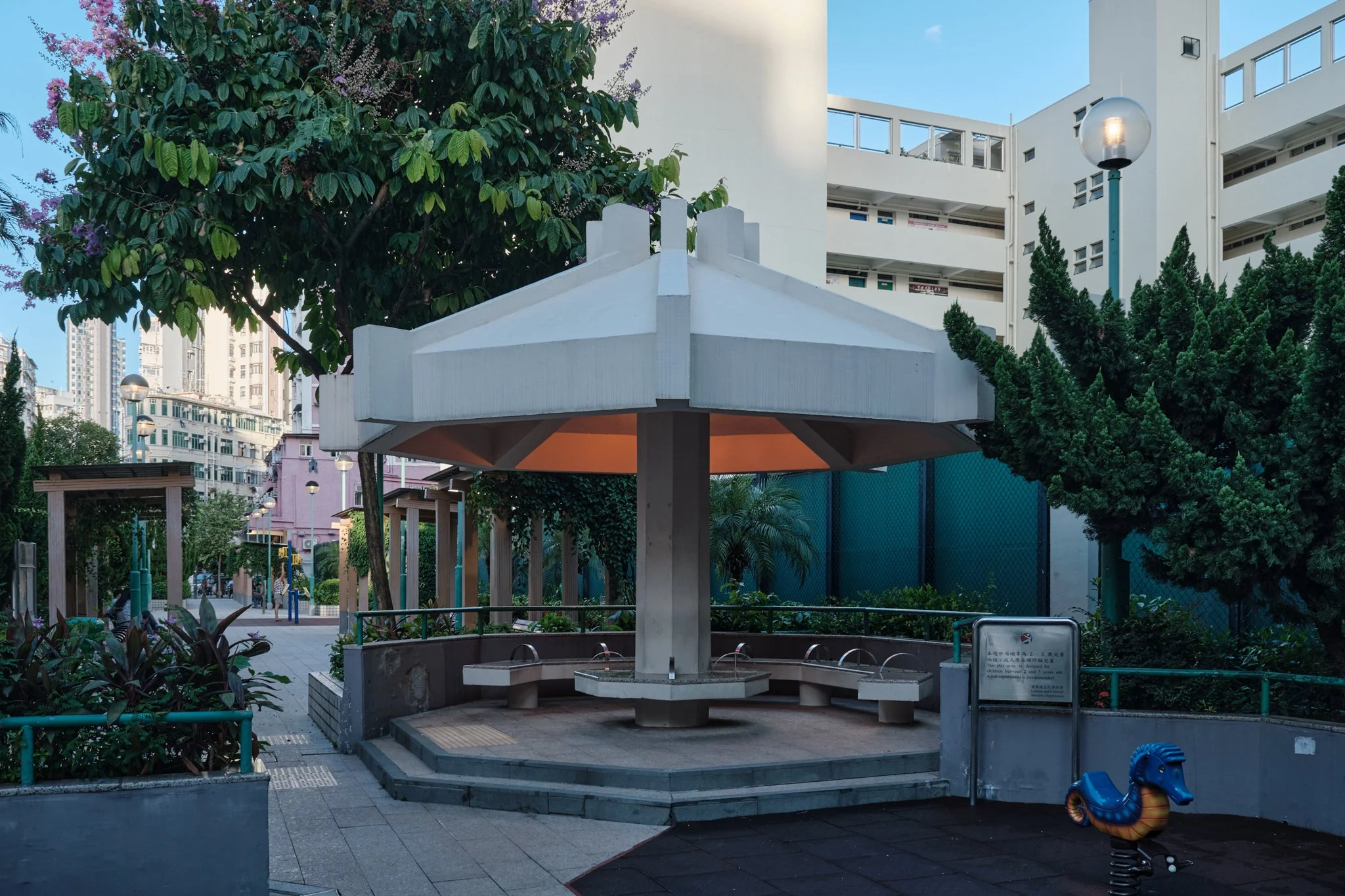
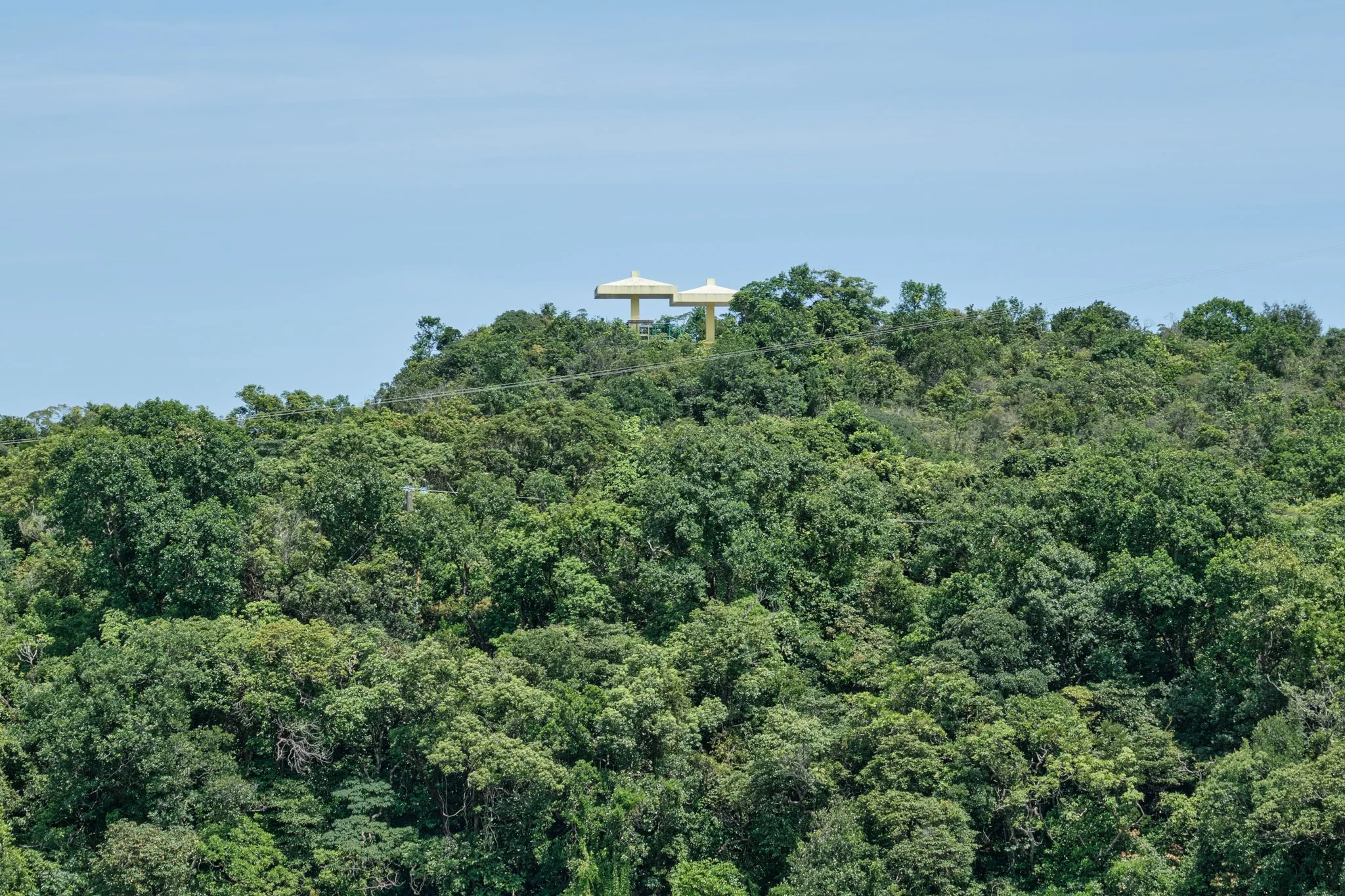
The aim of this project is to search, map and document a very specific architectural typology ubiquitous in Hong Kong – a structure I have affectionately dubbed the mushroom shelter. These reinforced concrete pavilions can be spotted in almost every district of the city, found in areas developed/redeveloped between the 1960’s–80’s: the peak years of mushroom shelter construction.
Their design can be traced back to the architectural development of mushroom slab construction in the early twentieth century, following the advent of reinforced concrete. Famous examples include Arne Jacobsen’s iconic Skovshoved Petrol Station in Denmark (1936) and Frank Lloyd Wright’s Johnson Wax Administration Building in the USA (1936–39). After WWII the use of mushroom slab construction became more widespread, leading to the free-standing variants that were later adopted in Hong Kong.
The colonial entrepot proved to be a natural home for these structures, where they double as a modernist interpretation of the traditional Chinese pavilion. Hong Kong was undergoing a rapid post-war expansion and mushroom shelters were a quickly built, attractive, scalable placemaking device (despite their lacklustre effectiveness as a shelter). Post-1997, perhaps in an effort to bolster a new, post-colonial identity, the style of shelter switched over to a more 'traditional' type of pavilion (though still rendered in concrete) complete with curved, upturned eaves and glazed roof tiles. In recent years, however, the mushroom shelter has made a few notable returns – dutifully added to the collection.
As such, the city is filled with all manner of mushroom shelters, but tracking them down wasn’t easy. They are mostly found in a few key locations – public housing estates, parks, sitting out areas, lookout points and even swimming pools. However, with ~1877 potential sites, it has taken many hours of virtual scouting (courtesy of Google maps) and additional days of legwork to whittle that list down. The collection currently stands at just over 100 sites, ranging from single specimens to groups of over 20! Following this comprehensive search, the project is nearing completion, pending some final shots in certain locations.